

Fueling for norseman
Norseman is not like anything else. Study the detail because the fueling demands are unique.
Every athlete who jumps from the ferry needs to understand how the different aspects of the course will impact their own fueling strategy. And that process of learning, experimenting, and practice happens in training. Understanding your own needs reduces the risk of facing the unexpected or having to
make unplanned decisions on race day.
Before the race
You should start the race with full glycogen stores. This will be the immediate (endogenous) fuel that your
body will utilise in the race during the swim and early part of the bike. The process of building your glycogen stores starts in the days before.
During this period, it’s a good idea to reduce high-fat and high-fiber foods that may linger in the gut and slow digestion. Instead, focus more on consuming carbohydrate-rich meals and snacks.
In the last 48-hours, a liquid carbohydrate fuel source like Maurten Drink Mix 320, is a good way to keep topping up on carbohydrates between meals while also staying hydrated.
the swim
The novelty of the Eidfjord ferry is exciting, but it also adds to the complexity of pre-race fueling. It will be difficult to recreate the atmosphere and adrenaline of that experience in training, but try to stay calm. A slightly elevated heart rate, brought on by the emotion and unique setting, could mean that you use more calories at rest. Timing is also a factor, and you should practice how to fuel for a very early swim start.
Throughout training you should try different breakfast options, refine it, and then stick to what works best for you on race day.
This is a race simulation experiment and it will get you used to eating and drinking at abnormal times that interrupt your normal rhythm — when ordinarily you might still be in bed.
It’s also recommended that you continue to top-up your fuel on race morning by sipping a liquid fuel. Making this a habit during training will also make it easier on race day.
Consider carrying a disposable bottle and a Gel 100 onto the ferry to ensure that you fuel right to the start. There will be a long period when you are on the ferry and away from access to your support team or gear.
It’s unlikely that you will carry or consume fuel during the swim, so be prepared for T1.
the bike
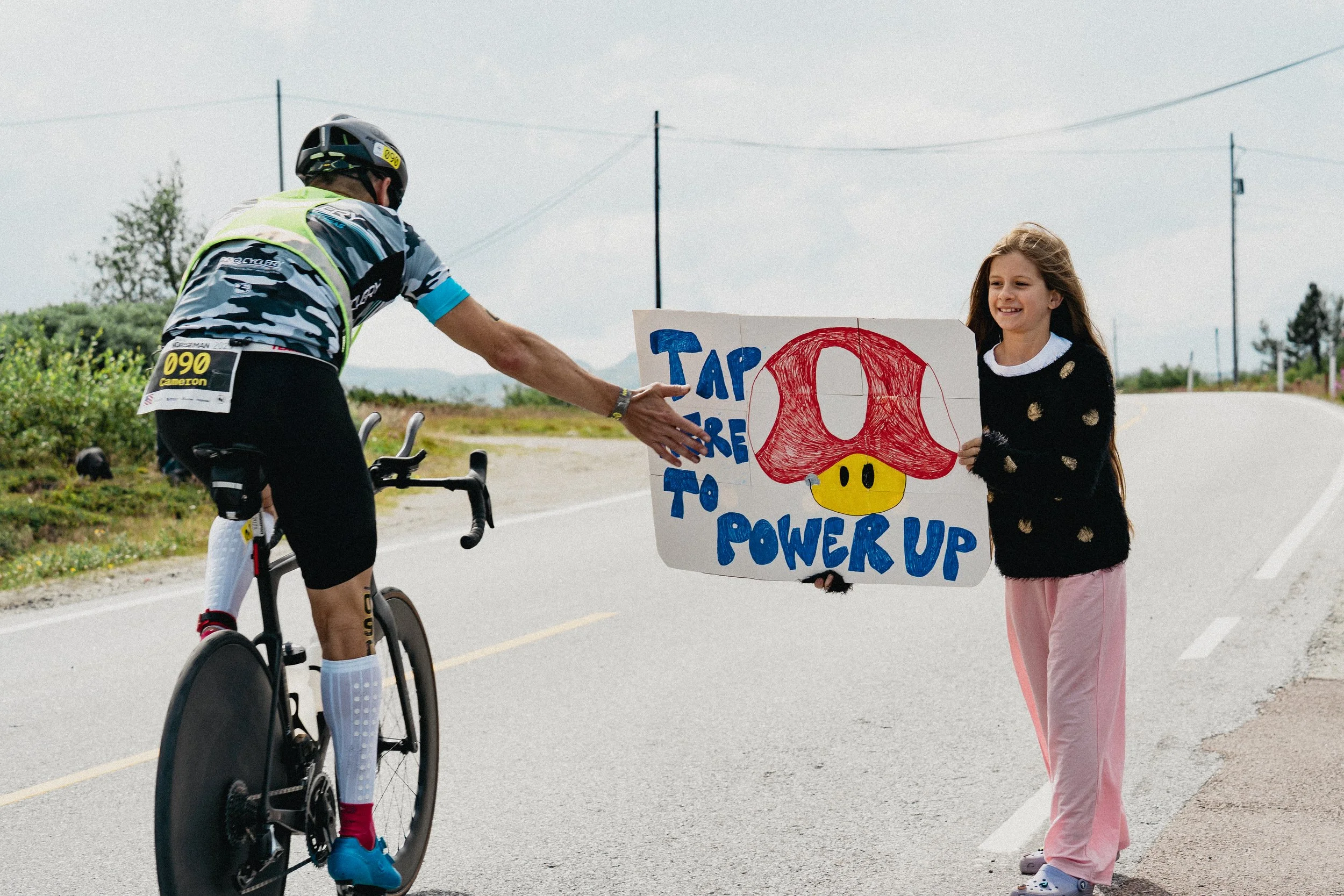
Take a moment to consume something before leaving on the bike, remembering that shortly after transition you will start the long climb to 36 km Dyranut. Heavy rain in the days before the race can mean very cold water in the fjord. Check the weather forecast and consider having a warm bottle prepared for the start of the bike.
This could be tea or coffee with 4-5 teaspoons of sugar (roughly 20 grams of carbohydrates).
From 90 minutes onwards regular fueling will be crucial for performance. This is roughly the amount of time you can exercise before the body starts to deplete its available glycogen stores. After this point the body will transition to being mostly reliant on what you consume in the race, known as your exogenous fuel.
The bike course can be broken down into phases of effort — periods of easier riding are punctuated by regular climbs. Once you ascend to the Hardangervidda, regular fueling should be easy to achieve. Until 90 km Geilo the terrain is mostly a rolling descent. Be aware that it can be easy to neglect fueling when you still feel fresh and the riding is easy. The sensations of becoming depleted (running out of energy) can happen suddenly and lead to rapid performance decline that can be very hard to recover from. Prepare for what is still to come by fueling consistently early in the ride. You can do this by setting reminders on your head unit or watch, or with stickers on the top tube — whatever tricks you need to help achieve your target amount of carbohydrates per hour. The excitement of race day and the competitive environment can make it easy to forget your well-planned strategy.
Weather can also be a significant factor on the exposed Hardangervidda. Naturally, when it is warm, you will feel more thirsty and consume more, but it can be easy to neglect fueling when the conditions are less favorable. A headwind will require more power — and more fuel — to achieve the same speed. Also, the discomfort of cold or rain can make it less appealing to reach for bottles and maintain adequate fueling.
Your support team should help remind you. After 90 km Geilo, there are four distinct climbs. Consider maintaining effort on the climbs and fueling in the gaps between. A strong headwind can be a feature on the longest climb — to Imingfjell — before the long descent to T2 in Austbygde.
When consuming fuel on the Hardangervidda, be mindful of the road surface and the strength of any sidewinds. There is no shelter and it can be easy to lose control with one hand on a bottle. The long descent and easy riding towards T2 should encourage you to spin out the legs and finish all the fuel you have on the bike. Arrive feeling well fueled and ready to run.
the run
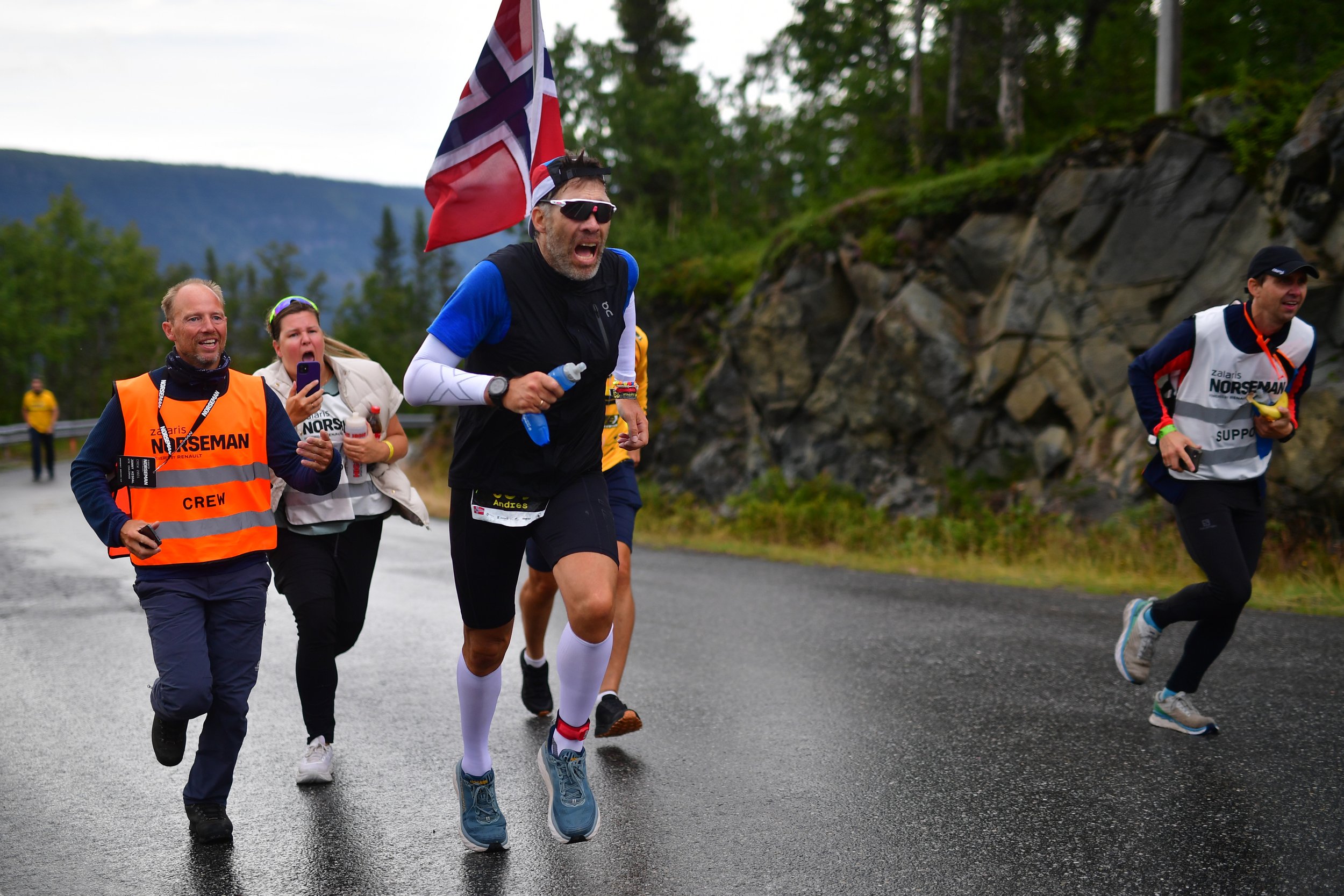
From a fueling perspective, the run can also be split into two experiences. The initial 25km are predominantly flat with a gentle incline towards the base of Gaustatoppen — the start of Zombie Hill. This section can be fueled like a regular marathon, taking into consideration the work that you have already done. Fuel should be consumed regularly and often — every 20 minutes. By now your body will be utilising only the carbohydrates that you have consumed during the race, plus some fat. As a result, the amount of carbohydrates you require per hour will be higher than at the start of the race. Maximise the opportunity to fuel on the flat, before you reach the Zombie Hill. By now, the temperature could be higher — heat reflecting back from the long stretches of straight road and generally warm weather requires that you continue to drink to thirst. It’s advised to use both Gels and Drink Mix here.
You should be well-fueled before starting the Zombie Hill climb. The significant elevation difference, steep climb, and technical terrain to the summit mean the second half of the run will take longer. Effort will increase with the gradient, which will affect your energy expenditure to maintain a projected pace. If possible, practice the sensations, logistics, and comfort of fueling while running uphill. Again, this is a unique moment and your fueling protocol should be tailored to these aspects of the course.
Remember to keep fueling all the way to the finish. Norseman is a long and hard race, and completing your target carbohydrate consumption will be one of the most important performance factors.
get used to it
Fueling is not just for race-day. To help understand your unique fueling needs, Maurten Fuel Planner exists to support the process of training your gut before you jump into the fjord. It turns course demands and your physiological data into a personalized fueling protocol — estimating carbohydrate stores and energy expenditure for a race-day or training session plan.
Built for triathletes seeking clear, detailed answers for how and when to fuel. Create your plan with the built-in Norseman course or upload GPX files for guidance on your own training routes below. Then refine and dial-in your fueling knowledge for the race. And of course, this is Norseman — always enjoy the views.